Module 6
Lesson 4 and 5
Student’s Book pages 65–67
Skills focus
Over the ocean
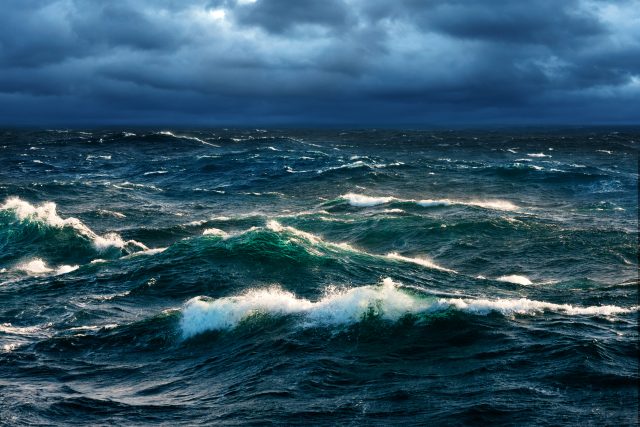
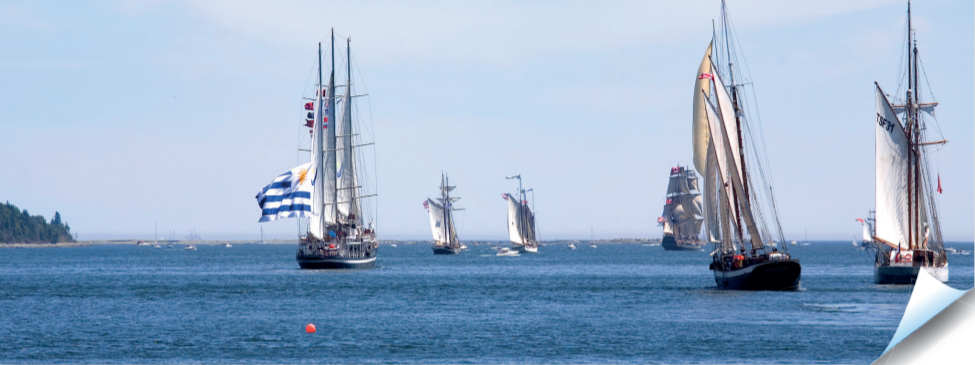
Before you start
Look at the pictures. What do you think they are about?
Answers
Students’ own answers
Reading
1 Listen to the words below in context. Try to guess their meanings.
|
crew, enthusiast, to plot, port, rigging, sailing, training, vessel, race |
Audioscript
1. The crew on the ship worked together to make sure the boat ride was smooth for all passengers.
2. I am an enthusiast of outdoor games and try to attend every game I can.
3. We plotted the places we wanted to visit with pins onto a map.
4. They waved at the ship as it sailed away from the port.
5. The captain checked the sails and rigging before sailing off.
6. I love sailing because I enjoy travelling over the sea like they did in the past.
7. I have to go through hard training for the football game so that I play well.
8. The Titanic was a huge vessel that used to sail across large oceans.
9. Samer won the race by reaching the finish line before anyone else.
Find the words
- An event in which people try to be faster than each other
- What you get when you learn new skills to do something
- To show something on a map
Answers
race; training; to plot
Reading
2 Look at the heading of this magazine article. What would you describe from your own life as ‘the experience of a lifetime’? Read the text to find about other teenagers’ adventures. Refer to the map on page 87 to locate the places mentioned in the article.
Answers Students’ own answers
THE EXPERIENCE OF A LIFETIME
THE TALL SHIPS ATLANTIC CHALLENGE
IS ONE OF THE BIGGEST EVENTS OF THE YEAR
FOR SAILING ENTHUSIASTS
The race started in 1953, when 20 ships sailed from southern England to Portugal. Since then, it has become bigger and bigger and is now one of the most popular events in the sailing calendar.
The ships in the 2009 Atlantic Challenge were traditional vessels with sails and rigging. They came from Europe, North America and even Uruguay in South America. Their 130,000-km trip took five months to complete, and involved over a thousand crew members and visits to seven ports and five countries.
Most of the people on the ship were teenagers on sail-training programmes led by experienced sailors. They had an amazing trip that took them from Spain to the Canary Islands, and then across the Atlantic to Bermuda. After the ships reached the USA, they raced on to Nova Scotia. The final part of the race, which was over 43,500 km, took a month.
During the race, the crew reported its progress to the organisers. They did this twice a day, at 6 a.m. and 4 p.m. UK time. The ships’ positions were then plotted on a map, so that families and friends could follow their progress. At each port on the route, there were spectacular celebrations when the ships arrived.
Patrick Kelly, a teenager on one of the first ships to arrive, said: ‘I wanted to go on a new and exciting adventure. This really has been the experience of a lifetime! Since I’ve been on this ship, I’ve made lots of new friends and I’ve discovered a lot about the countries on our route and about myself, too. This has been the longest that I’ve ever been away from home, so the best part for me was just now, when we sailed back into Belfast!’
3 Read the article on page 66 again and answer the questions.
1. What kinds of ships took part in the Atlantic Challenge?
2. Who were the crew members on the ships?
3. According to the article, what locations did the ships pass by?
4. Why did the organisers plot the ships’ positions twice a day?
5. In your opinion, what kind of personality does Patrick Kelly have? Justify your answer.
Answers
1. The ships that took part in the Atlantic Challenge were traditional vessels with sails and rigging.
2. The crew members were mostly teenagers on sail-training programmes led by experienced sailors.
3. The ships took a trip from Spain to the Canary Islands, across the Atlantic to Bermuda, reaching the USA, on to Nova Scotia and then to Belfast (Northern Ireland).
4. This was done so families and friends could follow the ships’ progress.
5. Students’ own answers
LISTENING
4 Match the words from the table below with the pictures. Then, listen and check your answers.
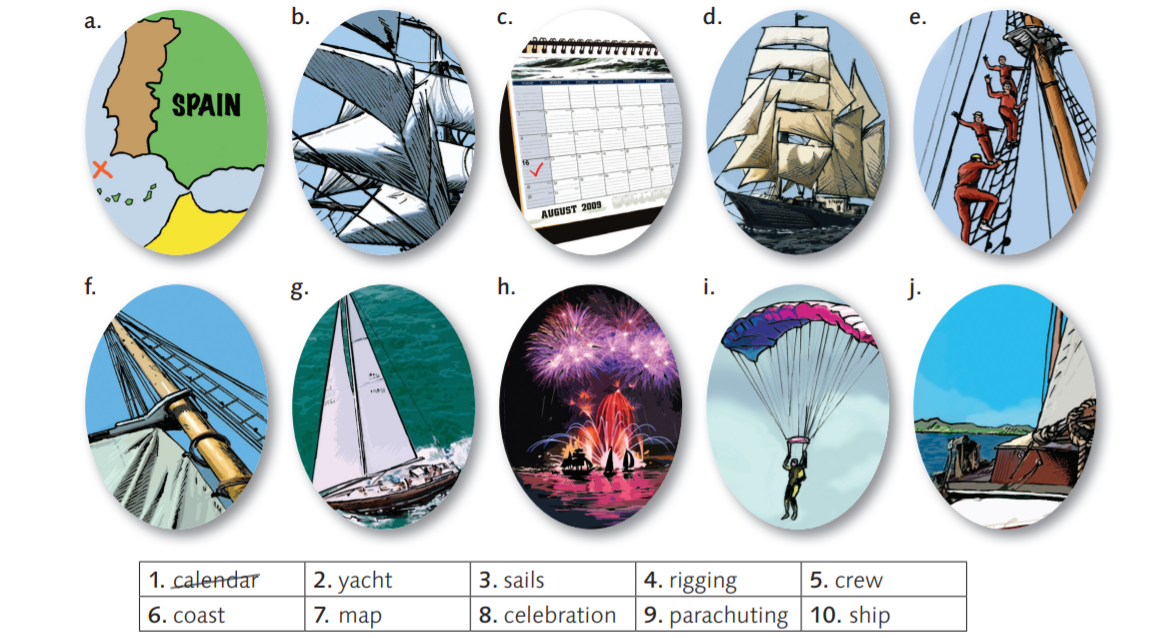
Example: 1.c. calendar
Audioscript
1. c, calendar
2. g, yacht
3. b, sails
4. f, rigging
5. e, crew
6. j, coast
7. a, map
8. h, celebration
9. i, parachuting
10. d, ship
Answers
2. g; 3. b; 4. f; 5. e; 6. j; 7. a; 8. h; 9. i; 10. D
7 Read the Speaking Strategies. Then, think of a project to help the people in need in your city. It can be a poor neighbourhood, children in hospital or children in orphanages, for example. What do they need? What can you and your classmates do to help them? How can you convince your classmates to help them?
SPEAKING AND WRITING
5 Imagine that you are going to travel across the Atlantic Ocean on a traditional ship, with sails and rigging. The journey takes at least a month. Tell your partner how you would feel about the journey, giving reasons. You may use some of the adjectives from the box below to describe your feeling. Then, write two short paragraphs describing the journey. Use linking words for coherence.
|
amazed excited frightened terrified fascinated |
Example: I’m frightened because this is a new experience for me.
Answers Students’ own answers
Activity Book pages 49-50
The Present Perfect Simple and the Past Simple (questions and answers)
4 Look at this page from Omar’s passport and complete the dialogue.

Rashid: (1) Have you been (you / be) to Hong Kong?
Omar: Yes, I (2) ……………. .
Rashid: When (3) ……………………. . (you / go)?
Omar: I (4) …………….. (go) in 2007.
Rashid: Wow! So, (5) ………………… (you / be) to Canada, as well?
Omar: (6) ………………….
Rashid: When (7) …………… ?
Omar: (8) ………………… (go / 2009).
Answer
2. have
3. did you go
4. went
5. have you been
6. Yes, I have
7. did you go
8. I went in 2009
5 Match the sentence beginnings (1–5) with the endings (a–e).
1. He finished his homework
2. We have lived here
3. Since my first trip to England,
4. The expedition will last for
5. I haven’t seen Carol
a. since last Friday.
b. before he went to bed.
c. I’ve been back twice.
d. for three years.
e. three months.
Answer
1. b 2. d 3. c 4. e 5. a
6 Use the beginnings (1–5) in exercise 5 to write your own sentences.
Students’ own answers
The Present Perfect Simple and the Past Simple
7 Complete the dialogue with the Past Simple or Present Perfect Simple form of the verbs.
A: I (1) ……….. (not hear) from Samer for a long time. I wonder where he (2) …………… (be) for the past few weeks. B: Don’t worry, he’s fine, I (3) …………….. (speak) to him yesterday. He (4) ……………… (be) on a trip to South Africa for the past three weeks. A: Oh! (5) …………….. he (go) on safari when he was there? B: Yes, and he (6) ………………….. (take) lots of photos, but I (7) …………….. (not see) them yet.
Answers
1. haven’t heard 2. has been 3. spoke 4. has been 5. did/go 6. took 7. haven’t seen
Vocabulary corner
8 Read the clues 1–6 and write the words in the puzzle. You are given the first letters.
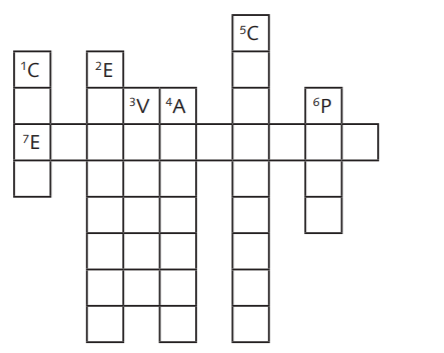
1. a group of people who work on a ship, plane or train
2. a person who travels through an unknown area to learn about it
3. a ship or a large boat
4. to move forward towards someone or something
5. any of the world’s main large and continuous masses of land
6. a place where ships load or unload
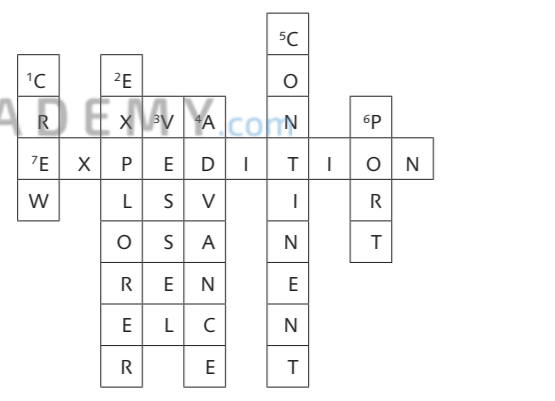
Answers
1. CREW
2. EXPLORER
3. VESSEL
4. ADVANCE
5. CONTINENT
6. PORT
9 What is the word for number 7? Write its clue.
Answers
7. EXPEDITION: a journey made by a number of people for a certain purpose.