1 SPEAKING In pairs, look at the photos and make a list of weather-related vocabulary to describe them. Which of the types of weather have you seen?
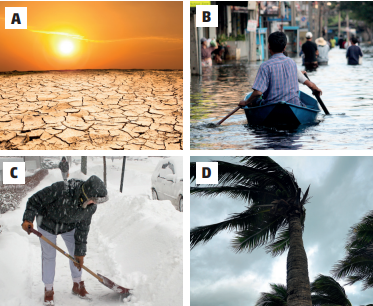
A drought, heatwave, high temperatures
B flood, heavy rain
C snowstorm, heavy snow, sub-zero temperatures
D windy, stormy, gale-force winds
2 Make more weather-related collocations, using the nouns from the box.
| Floods heat humidity rain snow temperatures weather winds |
1 blistering heat
2 freak temperatures / weather / winds
3 gale-force winds
4 heavy rain / snow
5 high temperatures / humidity
6 scorching heat / temperatures / weather
7 soaring temperatures
8 sub-zero temperatures
9 torrential rain
3 In groups, discuss the questions.
1 What problems do such weather conditions cause?
2 Look at some arguments people make about climate change. Do you think there is any truth in them?
• The temperature is actually cooling rather than heating up.
• Climate change is not being caused by human beings.
Students’ own answers
4 Listen to a lecture about climate change. Does the speaker agree with any of the arguments in Exercise 3?
No, he doesn’t.
5 Study Active Listening. Then match the signposting phrases to the functions.
1 c I’m going to be talking about …
2 b In other words, …
3 a The second thing is …
4 e … whereas …
5 d So, to sum up, …
a sequencing an argument
b indicating that the speaker is going to paraphrase what they just said
c introducing the topic
d concluding
e indicating another example
| ACTIVE LISTENING| Signposting ‘Signposts’ are phrases that help you follow what a speaker is saying. They can also indicate how something relates to what has already been said. |
6 Listen again and complete the notes with up to three words in each gap.
1 The percentage of scientists who believe that climate change is real is about 99 percent.
2 To understand changes to climate, it is necessary to look at the (overall weather) trends rather than the current weather.
3 It is possible that warmer weather may actually cause more snowfall.
4 In the past, temperature changes were gradual and caused by natural factors such as solar activity and volcanic eruptions.
5 While carbon dioxide may help plants to grow, it also causes freak weather which destroys crops.
7 REFLECT | Society Discuss the questions. 1 Is climate change something that you worry about? Say why. 2 What do you think individuals can do to make a difference
Students’ own answers
Worksheet
| Complete the weather report with the words and phrases from the box below. |
|
cold |
freak |
gale-force |
heat |
hot |
humidity |
pour |
|
scorching |
soaked |
Sub-zero |
torrential |
|||
And here’s the world weather report. It’s boiling hot in Australia, with blistering heat reaching 45 degrees in many places this week. Those scorching temperatures continue southwards into Indonesia and Thailand, where it is particularly humid for the time of the year—high humidity in Vietnam too. You can expect to get soaked in Southeast Asia next week, however, as the heatwave breaks and is replaced by torrential rain and the risk of floods and even hurricanes in the coming weeks. Crossing to Canada, it’s a completely different story—heavy snow and sub-zero temperatures making it a chilly minus 9 in Vancouver, and further north it’s freezing cold, reaching minus 28 in places. Returning to Europe and Germany, where freak weather means that gale-force winds have hit the city of Frankfurt and surrounding areas. The storms should finally die down tomorrow, but it's expected to pour with rain for most of the next week. That's the weather for now. We'll be back after the news.