|
Word / Phrase |
Definition (English) |
المعنى بالعربي |
|
Mediterranean diet |
a diet rich in fruits, vegetables, fish, and olive oil |
النظام الغذائي المتوسطي |
|
canteen |
a place where food is served in a school |
كافيتيريا / مقصف المدرسة |
|
processed fats |
artificial fats often found in fast food |
دهون مصنعة |
|
slow food |
food prepared carefully with fresh ingredients |
طعام بطيء التحضير |
|
locally grown |
food produced in the local area |
مزروع محلياً |
|
nutritious |
healthy and good for the body |
مغذي |
|
fermented foods |
foods like yoghurt with beneficial bacteria |
أطعمة مخمرة |
|
fizzy drinks |
carbonated drinks such as cola |
مشروبات غازية |
Reading Text: Are Your School Meals Healthy Enough?
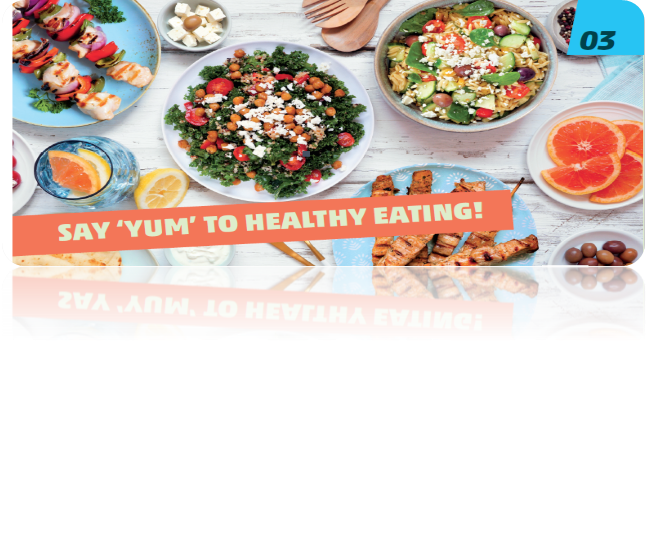
The Mediterranean diet has had a lot of publicity as one of the healthiest eating plans there is. People who live around the Mediterranean Sea are famous for eating plenty of fruits and vegetables, nuts and herbs – which are packed with vitamins and minerals – as well as wheat, rice and plant protein like beans. They also eat medium amounts of fish, chicken and eggs, and dairy products such as butter, cheese and yoghurt, with only a limited amount of red meat. On top of that, it is rich in the type of fats that are good for the body rather than processed fats, which can be harmful.
Main Idea / الفكرة الرئيسية: The Mediterranean diet is one of the healthiest because it is rich in fruits, vegetables, and good fats.
Italy offers a good example of a place where youngsters are being encouraged to follow this healthy diet. The Italian Ministry of Health works closely with schools on a national plan for school lunches. They provide rules that make sure school meals follow the Mediterranean diet..
Main Idea / الفكرة الرئيسية: Italy encourages children to eat healthily by creating a national plan for school meals.
At the same time, Italian schools don’t just care about nutrition. Like all school pupils, Italian children spend time in the school canteen filling up on much-needed calories and chatting with their friends. They learn about where different types of foods actually come from and how to prepare fresh, local ingredients to create traditional, regional dishes. Through this, children can learn to develop healthy eating choices for the rest of their lives.
Main Idea / الفكرة الرئيسية: Italian schools teach children not only nutrition but also food origins and preparation.
The school canteen tries to create a family eating experience. The setting encourages eating respectfully and carefully, and promotes the idea of ‘slow food’. Slow food, as opposed to fast food, connects the world of eating with the world of farming. It also means respecting the environment and trying to make sure that producing food for millions of people does not have a bad effect on the planet.
Main Idea / الفكرة الرئيسية: The school canteen promotes slow food and respect for the environment.
The programme follows a carefully planned daily menu that offers a balanced meal for each child. A main course could be pasta with tomato sauce and vegetables or sometimes meat. It could also be a pizza, lasagne or rice dish that is traditional in many parts of the country. As a side dish there might be cooked vegetables or fresh salad leaves, with tomato, cucumber and olive oil. Everyone at the table drinks water rather than fizzy drinks that are high in sugar. A
common way to end a meal is often with fresh fruit that is in season or a simple dessert.
Main Idea / الفكرة الرئيسية: The programme ensures balanced daily meals with water and fresh fruit instead of fizzy drinks.
By introducing children to their cooking traditions and amazing food culture, Italians hope to set up healthy eating habits for life in the next generation.