Ancient cities
There are ancient cities and buildings in many countries around the world. They can tell us a lot about the past!
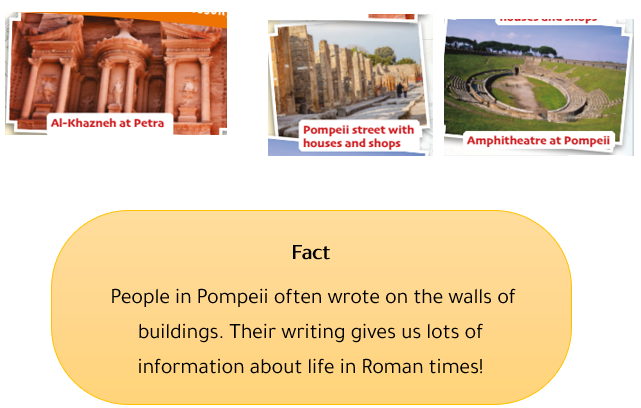
In 1812, a man from Switzerland was travelling in Jordan. He heard about an ancient city and asked someone to take him there. He then told the world about it. This was Petra. Petra was built by the Nabataeans over 2,000 years ago. It had gardens with fountains and ponds and even a swimming pool. The most famous place in the city is Al-Khazneh. Archaeologists aren’t sure why it was built. Some think it was a tomb for a king, while others believe it was a temple. Amazingly, most of the city is still underground! I n ancient Rome, now in Italy, there was a city called Pompeii. About 2,000 years ago, a volcano called Vesuvius erupted and covered the city with ash. In 1748, archaeologists started to dig under the ash, and today people can visit the city. There are streets, houses, shops, cafés and small factories. There is also a big outdoor amphitheatre, like a modern stadium. This is the place where people went to watch events.
Vocabulary – Ancient Cities
|
English |
Meaning in English |
Arabic Meaning |
|
ancient city |
a city that is very old |
مدينة قديمة |
|
archaeologists |
people who study ancient remains |
علماء الآثار |
|
fountain |
a structure that sends water into the air |
نافورة |
|
pond |
small water pool |
بركة ماء |
|
temple |
building used for religious purposes |
معبد |
|
tomb |
a place for burying dead |
قبر |
|
amphitheatre |
open-air venue for events |
مدرج / مسرح روماني |
|
volcano |
mountain that erupts |
بركان |
|
eruption |
sudden explosion of a volcano |
ثوران بركاني |
|
ash |
powder left after burning or eruption |
رماد |
|
ruins |
remains of old buildings |
أطلال |
|
brochure |
small book with information for tourists |
كتيب / نشرة |
Reading and Understanding
Text Summary:
- Petra, Jordan: Built by the Nabataeans 2,000 years ago. Gardens, pools, swimming pool. Al-Khazneh is famous. Still mostly underground.
- Pompeii, Italy: Destroyed by Vesuvius eruption 2,000 years ago. Archaeologists dug under ash. Visit streets, houses, shops, amphitheatre.
Key Points / Questions for Students:
- Why are these cities important? → They tell us about life in the past.
- What remains today? → Streets, buildings, amphitheatres, ruins.
- Who studies these cities? → Archaeologists