- Main Points from the Dialogue:
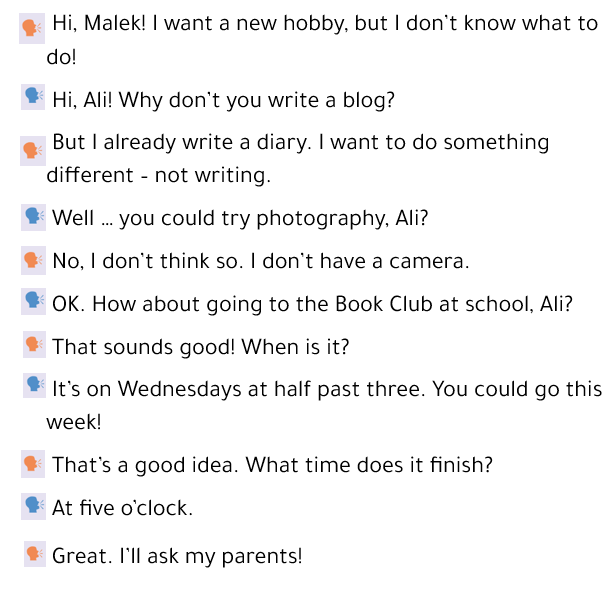
- Problem: Malek wants a new hobby but doesn’t know what to do.
- Suggestions: Ali suggests writing a blog or trying photography.
- Obstacles: Malek already writes a diary and doesn’t have a camera.
- Solution: Ali suggests going to the Book Club, which is a practical option.
- Outcome: Malek likes the idea and will ask his parents.
- Key Vocabulary & Expressions
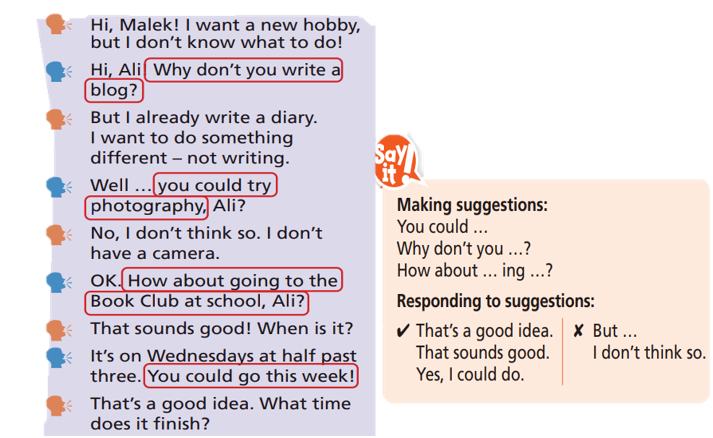
Making Suggestions:
You could…
Why don’t you…?
How about…?
- Responding to Suggestions:
- Positive responses: That’s a good idea/ That sounds good /Yes, I could do that.
- Negative responses: But…, I don’t think so
- 3. Grammar Focus
- Present Simple for talking about routines and preferences:
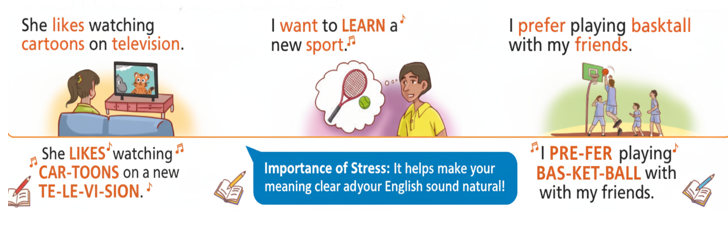
I like watching cartoons.
I want to learn a new sport.
I prefer playing basketball with my friends.
- State verbs: like, love, hate, enjoy, prefer, want are used to express thoughts, feelings, and preferences.
1. Listen and read. Answer the questions.
1 What hobby does Ali already do? He already writes a diary.
2 What club is Ali going to go to, and when? Book Club, on Wednesday.
2 Read the dialogue again. Find and write four suggestions that use language from the Say it! box.
3 Say new dialogues with your partner. Use the Say it! box to help you.
The student’s own answer
Pronunciation – Stressed Words
. What are stressed words?
- Stressed words are the words in a sentence we say louder, longer, or with more emphasis.
- Stress helps show the important information in a sentence so the listener understands it better.
. Why do we stress these words?
- State verbs like likes, wants, prefers are important because they show feelings, choices, or preferences.
- Nouns and verbs that tell what the activity is are also stressed to make the sentence clear.
Example:
- “I like swimming.” → like is stressed to show it is what you enjoy.