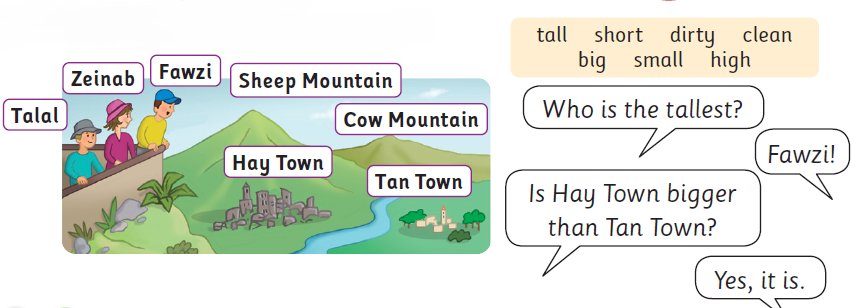
Comparative and Superlative Adjectives
(المقارنة والتفضيل في الصفات)
Comparative (للمقارنة بين شيئين)
We use comparative adjectives to compare two things.
نستخدمها لما نقارن بين شيئين فقط.
Form:
adjective + -er + than
Meaning: “more than” (أكثر من)
Examples:
-
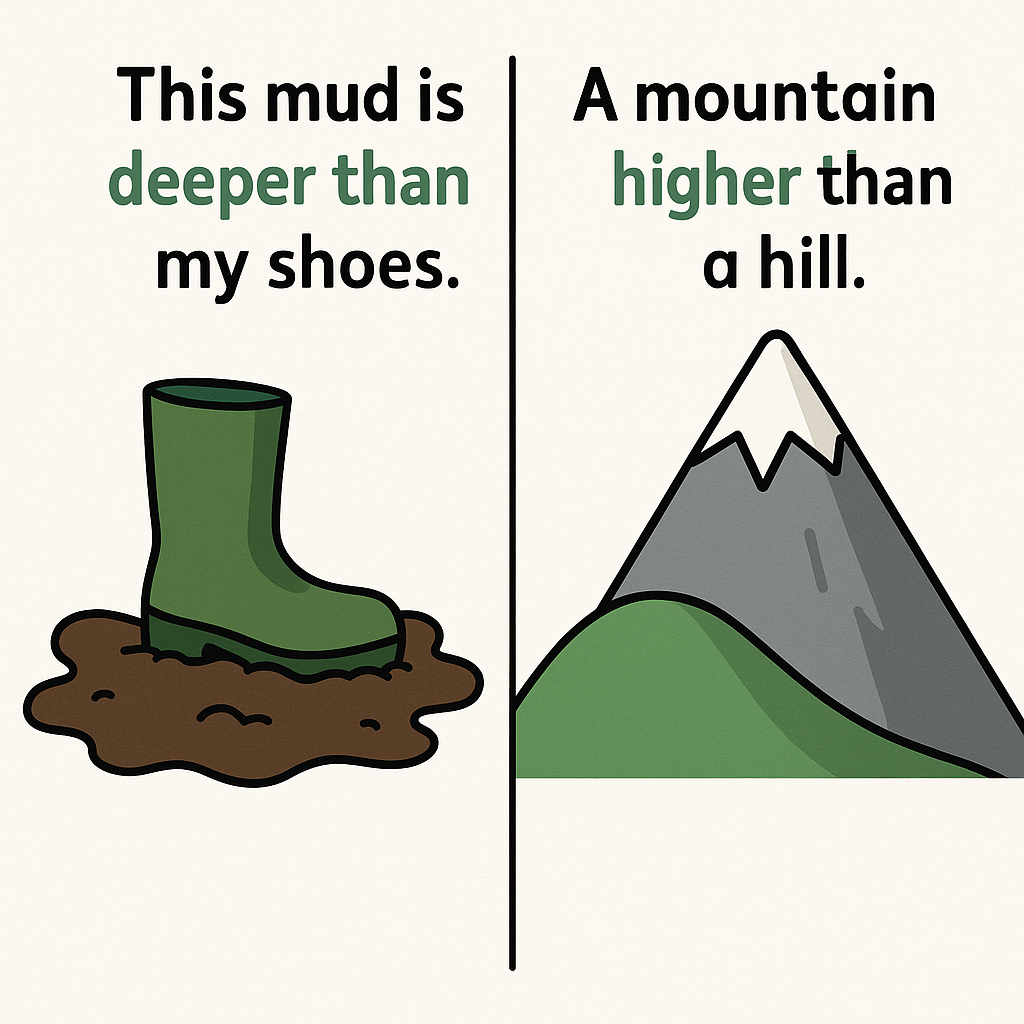
This mud is deeper than my shoes. (هذا الطين أعمق من حذائي.)
-
A mountain is higher than a hill. (الجبل أعلى من التل.)
Superlative (للتفضيل بين أكثر من شيئين)
We use superlative adjectives to compare three or more things.
نستخدمها لما نقارن بين أكثر من شيئين أو كل الأشياء.
Form:
the + adjective + -est
Meaning: “the most…” (الأكثر...)
Examples:
-
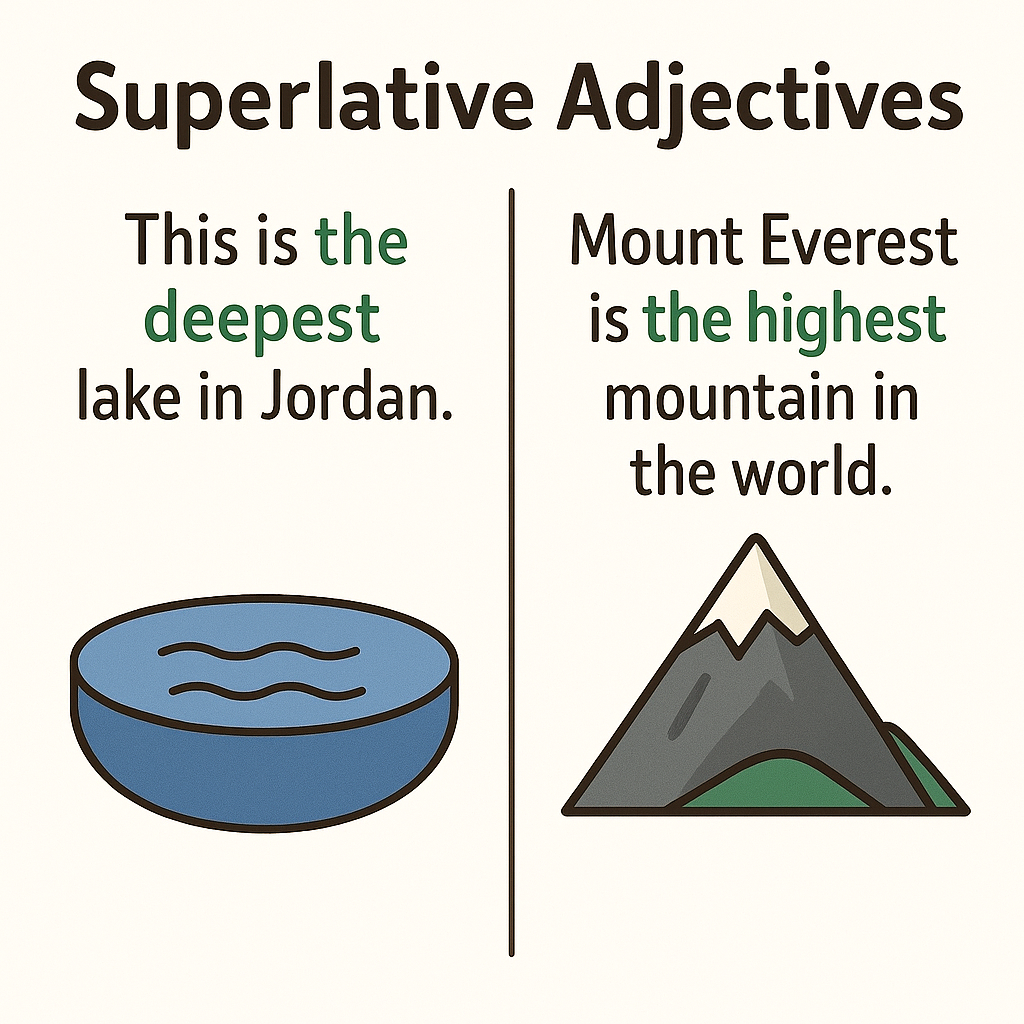
This is the deepest lake in Jordan. (هذه أعمق بحيرة في الأردن.)
-
Mount Everest is the highest mountain in the world. (جبل إيفرست هو أعلى جبل في العالم.)
Spelling Rules
Words ending with -e
If the adjective ends with -e, just add -r or -st (لا نضيف e مرتين).
Examples:
-
large → larger → largest
-
nice → nicer → nicest
إذا الكلمة تنتهي بـ e، نضيف فقط r / st بدون تكرار e.
Words ending with -y
If the adjective ends with -y after a consonant (حرف ساكن), change y → i and then add -er / -est.
Examples:
-
happy → happier → happiest
-
funny → funnier → funniest
But if there’s a vowel before y (حرف علة قبل الـ y), don’t change the y.
Examples:
-
gray → grayer → grayest
-
gay → gayer → gayest
لو في حرف ساكن قبل y نحولها إلى i، أما إذا في حرف علة قبل y نخليها مثل ما هي.
Double the final consonant
If the adjective ends with a single vowel + a single consonant, double the final consonant before adding -er / -est.
Examples:
-
big → bigger → biggest
-
hot → hotter → hottest
-
thin → thinner → thinnest
إذا الكلمة فيها حرف علة واحد وبعده حرف ساكن واحد، نكرر الحرف الأخير قبل إضافة er أو est.
أما إذا فيها أكثر من حرف علة أو ساكنين معًا، ما نكرر.
Examples (no doubling):
-
cold → colder → coldest
-
great → greater → greatest
Adjectives ➜ Comparative ➜ Superlative
+er + than the + est
tall ➜ taller than ➜ the tallest
high ➜ higher than ➜ the highest
deep ➜ deeper than ➜ the deepest